Practice
Sitting practice is the heart of the Zen path — a simple act that requires only stillness, a steady posture, and attention to the present moment.
Zazen
Zazen — "seated meditation" — is the core practice of the Zen tradition. It requires no special posture, a particular way of breathing, or the achievement of any specific state. It requires only that you sit, remain still, and let the mind settle.
At our meetings we begin with a short introduction to posture and breathing, so that everyone — regardless of experience — can take part with ease.
Format of the meetings
A brief explanation of posture, breathing, and the purpose of sitting — especially useful for newcomers.
Silent group sitting practice, marked by the sound of a bell at the beginning and end.
A brief time for sharing and questions — space to discuss what arose during practice.
Don't look for a calm mind — just sit down, and observe it as it is.
Guide
Choose a quiet, calm place that is neither too dark nor too bright, neither too warm nor too cold. Traditionally one sits in the full-lotus or half-lotus position on a cushion (zafu), placed on a mat (zabuton) that raises the hips and allows the knees to rest firmly on the floor. If this is uncomfortable, you may kneel (seiza), use a low meditation bench, or sit on a chair — what matters is that the back stays straight and the body balanced, without leaning forward, back, or to either side.
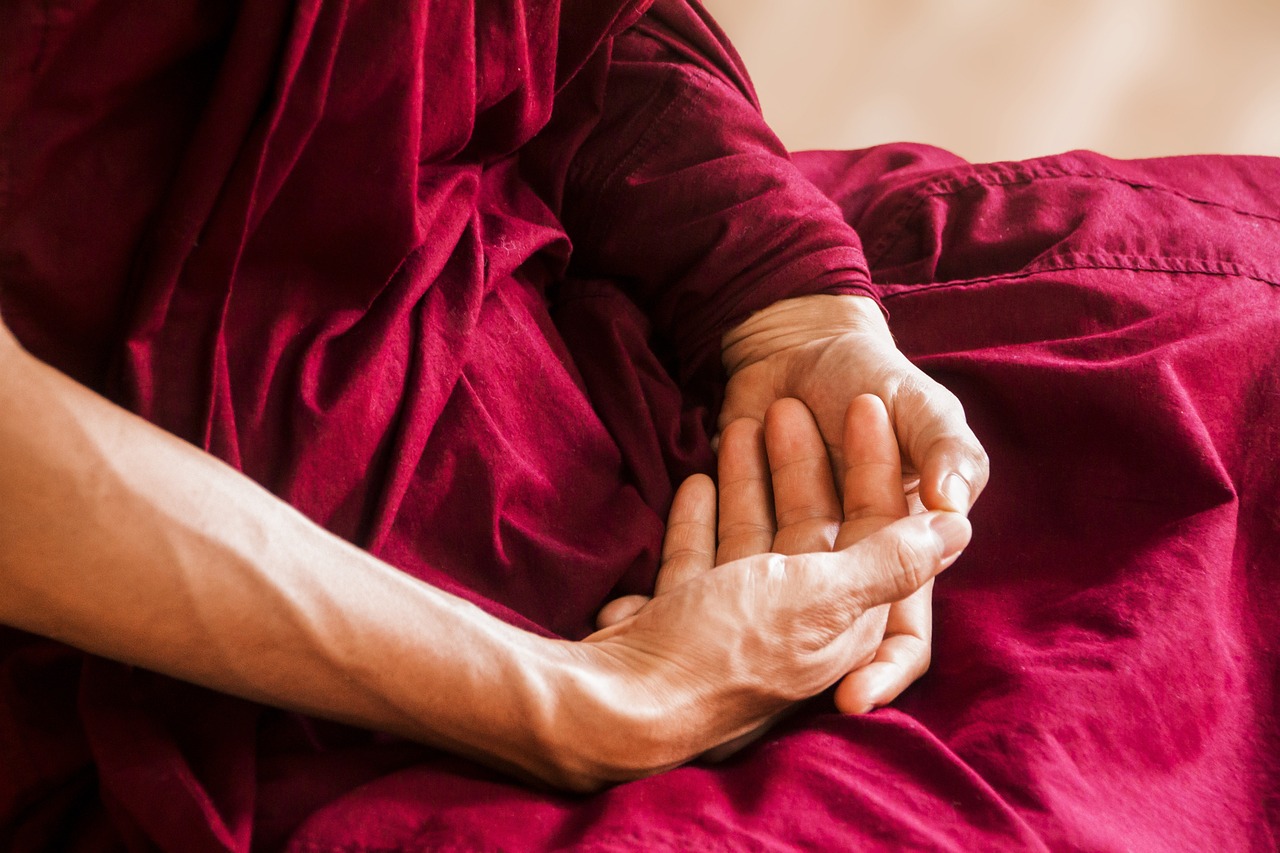
Keep your back and neck straight, your chin slightly tucked, your mouth closed, and your tongue resting against the roof of the mouth behind the teeth. Traditionally in Zen the eyes remain slightly open, gaze resting about a meter in front of you on the floor — this prevents the mind from drifting into drowsiness. The hands rest in the "cosmic mudra": left palm on top of the right, palms facing up, thumbs lightly touching to form an oval; the wrists rest on the thighs.
Breathe quietly through the nose, establishing a calm, long, and natural rhythm — attention is directed mainly to the exhale, while the inhale happens on its own. During practice it is normal for thoughts, images, and emotions to arise. Don't chase them and don't fight them — simply let them pass, like clouds in the sky, and return your attention to posture and breath.
Before sitting, take a few deep breaths and gently rock your body from side to side to find balance. Perform gassho (palms pressed together in front of the chest, with a slight bow) as a sign of respect for the practice, before taking your seat. At the end of the sitting period, perform gassho again, remain seated calmly for a few more minutes before rising, and refrain from talking immediately after practice.
"Just sitting, without seeking any goal or personal gain — you will understand Buddha-nature."
Join us
No experience, special clothing, or prior registration is needed. Just come — we'll welcome you and explain everything on-site.
See meeting times